Wednesday, January 9, 2013

Writing About A Film


Writing About A Film
     1) The first type of film writing described in this article is Formal analysis. Film analysis first divides the film and describes how certain sections present the movie as a whole. This type of writing focuses on specific segments of the movie in order to fully understand the entire film.


The second type of writing is cultural studies or natural cinemas, this analyze films that reflect certain cultures or nations, since cultures and ideas differ from all around the world, so do the films and how they portray a story.

The third type of film writing is film history. Film history is a type of writing in which discuss how history is influenced in the film, film history also includes the history of the actual film such as the productions and the releases.

The fourth is discussion of the auteur, this discuses how the final product came to be from the viewpoint of one person, usually the director, however its significant to note that there are several people who help to create a film and incorporate their ideas and work as well.

2) Annotating a Film Sequence is a form of note taking that involves labeling each shot in the sequence. This allows to keep track of such excessive and complicated shots. There are many benefits to annotating a film sequence.This will help to recognize any patterns in shots such as camera movements or editing decisions. In addition this could help with learning how the director made the film and what impact it had on the audience. This specific attention into cinematography will help to understand the overall film.
3) When the author mentions to "Think Beyond the Frame" she is referring too not only examine what is in front of us, "the frame", but to expand our thinking to what it is beyond just the actual work. This would include an assortment of topics about the film like how it was made or the historical and cultural context. In addition it is important to ask other questions such as how a genre helps to develop knowledge, this will allow you to have more appreciations for film accomplishments, furthermore knowing the production history will also aid you in into understanding the choices of the director, lastly another good thing to learn would be how film reflects cultural phenomenons, this will help to focus on similarities and differences due to culture in film. Thinking beyond the Frame such as this will help to make a well round and deep film analysis. 

Wednesday, December 5, 2012

Bad Teacher Trailer Review

Bad Teacher Trailer Review 
Bad Teacher Movie
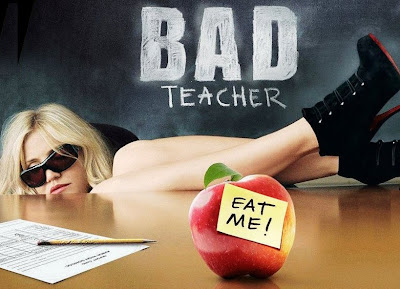
The narrative of this trailer is conveyed to the audience through the dialogue between the main character, Elizabeth Halsey, played by Cameron Diaz and other supporting characters. This dialogue really shows Ms.Halsey's comical and extremely inappropriate personality. Through direct dialogue, it becomes obvious that this film is very humorous, we know right away that this teacher has completely corrupt morals as well as her indifference about her job, however she is still very likable due to her absurd charm.  


The Mis En Scene of the film first presents Ms.Halsey as a careless teacher who is still somewhat of a kid herself, in the opening scene she forgets the first day of school and then states that she is not going to go, she then mocks the other teacher when she says its mandatory and then swears.Right off the bat we know this teacher is extremely awful. To further explore Ms.Halsey's vulgar personality, we then see several scenes in which her actions portray her, for example intoxication at the school, calling students stupid, throwing papers at kids and calling them morons etc. The trailer then presents an obstacle for the main character, Ms.Halsey, she states that "My full time job is know finding a guy who is gunna take care of me".She meets another new teacher Scott Delacorte, played by Justin Timberlake. When she finds out that he is rich she wants to be in a relationship with him. After seeing his old girlfriend, she believes that if she gets breast surgery then Scott will be more attracted to her and want to be in a relationship as well. Then next scenes of the trailer then shows what she is willing to do to get the money for her breast surgery, this includes a bonus that is given to the teacher who has the highest test scores. When then see Ms.Halsey strive for the bonus with some competition, from the antagonist, a fellow teacher that disproves of her. Overall the trailer does a good task in explain to the audience character, character personality, setting, obstacle, and a goal.     

The cinematography of the trailer further pushes the characters on a comedic level, highlighting Ms.Halsey's willingness to do anything, no matter how crude, to get her surgery.The trailer includes a girl saying that the school car washes make alot of money. In the next scene we see Ms.Halsey in skimpy clothes washing cars while men and boys gawk at her.Many of these shots have been copied several times, given the sensual classic look of  a women with a car. However what makes this scene funny is the reaction shots of the men as Ms.Halsey flaunts herself in order to get men to spend  there money at the car wash. We see all the men with open mouths and even a policeman who is gazing at her while driving, runs into another.  In the shot to the left, I love the lighting in which not only illuminates her but also the water being sprayed. This is a very prominent way to give off seductive mood in the shot. In both pictures, right and left ,we see that camera position  placing her right in the middle of the shot. thus allowing us to focus on her more then anything else and also gives her a more flattering look using the car. If this shot had used the rule of thirds it may appear more artsy  but then it would not humorous and the audience wouldn't fully have direct attention on her. 


  The edit of this trailer really shows the contents of the movie without giving it to much information to ruin the story. The overall time of the trailer is 2 minutes and 29 seconds, this is a fairly long trailer, but it uses the time very well to convey to the audience the purpose of the film.  Several thing included in this trailer where many of the names of the actors or small descriptions were in the titles. However almost everything that is explained is through the film itself.

Lastly the Sound Design fits well with the trailer, it uses many of the songs that were popular during this year and that are relative to the section of the film. For example, when Ms.Halsey is meeting Scott for the first time and she is talking about how she needs him to be attracted to her, she then changes her persona in a more respectable manner anytime she is around him, the name of the song in the background is"Tighten Up", this song talks about love and needing it. Another example would include when Ms. Halsey is desperate for money and she does anything she can for funds, as we see this we hear "Beggin" by Madcon. These songs further push the motive of the character and the plot.


Friday, November 30, 2012

Documentary Preprodution Gay Marriage

Gay Marriage

1. Purpose:
We have gained equality for races, so why not love? Words like gay, lesbian, bisexual, and straight should be obliterated. For love is life’s greatest gift, and that love should not be tarnished by those who find it unnatural.

2. Contacts: (Possible) High School Students: Carlos Lozada (Agreed), Tony Mena, Katie Teele (Agreed) Adults: Mariono (Mom’s coworker)
3. Interview Questions:
1)Do you believe partnership is enough?
2)How does this make you feel in terms of equality for everyone?
3)What did you think of Tammy Baldwin as History’s first openly gay politician?
4)How do you feel when you hear about people who have committed suicide for being harassed for their sexuality?
5) How do your parents feel about your sexuality?
4. Shot list:
-B Roll of clips: Macklemore’s song “Same love” specifically the part where he says, “No freedom till we are equal. Damn right I support it” & “And a certificate on paper isn’t gonna solve it all but its a damn good place to start.”
-B Roll of clips: Tammy Baldwin, making history as the first openly gay politician http://www.cnn.com/2012/11/07/politics/wisconsin-tammy-baldwin-senate/index.html
-B Roll of clips from tv shows that have started to accept gay couples
-Interview shots: Medium waist shots.
5.General flow:
-Open with Macklemore’s song “Same love” Introduce the issue of gay marriage
-Talk about how he supports gay marriage, link to how tv shows are beginning to support it as well.
-Start putting in interviews, lace them in.
-B Roll of Macklemore’s song when asking question about partnership, if it is enough.
-Cont with interview
-Cut to Clip of Tammy Baldwin.
-Ask Tammy Baldwin question.
-Ask how do you feel about the deaths surrounding one’s sexuality.
-Switch to teen committing suicide videos (youtube**cards) and clips from news, add a statistic
-Answer question, we need equality, too many lives have been shattered by this issue. People don’t feel equal, they feel inferior, that they are wrong leads to suicide depression in teens, change is necessary.
-End with Macklemore’s line: “And a certificate on paper isn’t gonna solve it all but its a damn good place to start.”
6.Scripts:
Intro:
Closing:
7.Production Schedule- Dates for interviews/B Roll:
Get interviews by: 12/7/2012
Project due: 12/14/12

Tuesday, November 27, 2012

The F***-It-Point Documentary Review

The Fuck-It PointF***-It-Point: "When you have had enough. When you take matters into your own hands and don't care whats going to happen to you. When you know from now on you will resist from whatever tactic you think is most effective"
Society has dug itself into a deep hole while using all our resources in the process. We are driving ourselves into our own extinction, however no one quite likes to think about this thought due to people's perception of now and not tomorrow. F*** It-Point is a documentary expressing these thoughts fully and to an eye opening extent. It conveys the actions we take as a society and what there true effects are and in the long run these effects will resume to add to our problem and continue to make them unsolvable. With documentary we are able to learn the outcome of our decisions and how they have left us into several major crises. If we don't stop the ways of society then we will only be closer to our own end.

The film starts off by using another work, "Man vs. Wild", as Bear Grylls stating you can go with out air for 3 minutes, you can go without water for 3 days and you can go with food for 3 weeks, the simple necessities we need in order to maintain life. The film then engages us with growing absence of our own resources. This is all communicated through us through a narrator and film that relates to society's exploitation of resources.The footage used in the first five minutes of the film is very alarming and some what scary. We see empty grocery stores, explosions from oil companies, fishing boats to then the ocean being vacant, afforestation,populations, harming other species, over crowding of people etc. In addition the music that accompanies this section of the film is unsettling. It makes your skin crawl and for this time in the film you are very uncomfortable.


The film also uses many other powerful shots that really show how human activity is not only killing ourselves, but we are first leading other animals into extinction. For example, there is footage of a sea lion swimming in the ocean. The ocean is filled with garbage and many of the ice floating on top of the water are melting. Many times we talk about these subjects of polar ice caps and our waste being part of the sea, but never actually seeing it, this footage not only show us this but we also see the animals having to live alongside it. We see the sea lion swim next to a shopping cart, and when it comes up from the water for air we see factories with large structures pumping out fumes in the background. This is not only an amazing shot due to the closeness of the sea lion, but it really shows how our lives invade the rest of
the living things on earth.This footage did not have a voice over or subtitles or any type of words, the pure film was able to drastically convey that animals are suffering in because of our own lifestyles.


One one of the most interesting characteristics of the film is that is is constantly alluding to other films or t.v shows. It uses this technique to show many misconceptions.Other times it uses important lines form a film to further push a point they are trying to make. For example one of the most commonly said things that humans can do to help the earth is to take shorter shower, ride your bike to work, buy organic products etc, to show how popular this idea is the showed a clip from the t.v series "Scrubs" , were one of the characters bought hemp underwear because he is "saving the planet". The narrator states that the media has told us that we are the problem for the crises of the world, that because of our living we have destroyed everything. If thought this way then the only to help the earth to kill ourselves. Instead at looking at this way, it is not the average citizen, it's he large industries that cut down trees and create toxic factories. This way of living and trying to cut down on consumption is almost hopeless because the machines used for the tasks of  terminating the planet will create more destruction then any one human could.

The usage for the F***-It-Point is revealed at the end of the documentary. This was a film that truly got its point across, the overall film technique was almost like a montage, it did not use one film or create a film, it instead took from several sources and used a voice over to guide the audience.Due to this montage effect it had many different angles wit many different styles of film as well footage of the process of killing our planet.  The film did not use any interviews because it explains how biest something can be when we asked people for information, how the truth can be distorted, leading us to believe information that is inaccurate. Overall this documentary is very eye-opening and will really change the way we look not only at ourselves, but about the future of our earth.


Monday, October 8, 2012

Soviet Montage and Realism


Soviet Montage and Realism
3.Soviet Montage
a.In Puedovkin's concept of constructive editing, he believed that juxtaposition itself should make a new point and form new meanings, instead of  depending on the actual shots to rely on its meaning through this juxtaposition. He disagreed with D.W Griffith methods of close ups, he thought they ruined the flow of the film and did not provide any meaning as well.In addition Pudovkin affirmed that montages, when used correctly where one of the best ways to convey the meanings in the hidden jumble of life.However these montages should use close ups rather then long shots because with close up's it easier to focus on details, unlike long shots, which he also believed related too much to reality. These ideas manifested when people saw the impact on which it made to audience when these rules were followed, many other film makers such as Hitchcock and Lev Kuleshov.
b.The Kuleshov effect was Lev Kuleshov idea that putting together shots and it be able to justify one action.He demonstrated that the actors or not the ones who create emotion within the audience, but instead the association with the juxtaposition.The Kuleshove effect is widely used today, a simple example would be a women, who is crying and obviously very emotional, the next shot would be a picture of a children. The audience is able to understand that the women is probably the mother of the kids and we can conclude that she is missing them at that moment. 
c. Eisensteinian Montage was expressed as constant change and the contrasting through opposites.In addition  the conflict of opposite was the cause for change.It was also expressed that good film relied on the edit and that shots should be incomplete. "Odessa Step" sequence shows this because in the film there is constantly juxtaposition from the soldiers who are shooting guns to then the next shot of people reacting and a crowd running away.Their are several juxtaposition certain characters and their the actions of the war.For example we see a child brutally shot and trampled on by the panicked crowed, we then see the appalled mother.


4.Andre Bazin and Realism  
a.Andre Bazin's frustrations with Formalistic film making was that he believed that the distortions of formalist techniques violated complications of reality. He categorized formalsit as conceited and manipulative.  Furthermore Bazin thought that he montage created simple ideology of life rather then a endless changing variable. Brazin also affirmed that overall editing destroyed the effectiveness of the film. More specifically, Classic Cutting he believed to have shot sequence that forces the audience to follow without them realizing the restrictions of it. He concluded that the viewers were not able to make their own meaning.
b. According to Bazin, realist should emphasize a concept of reality. It is the director's job to uncover art of normal everyday people,events, and locations. Filming should not just be recording an object, but it should not be a symbolic abstraction. In addition he believed if a filmmaker wanted to present two or more elements at the same time in one seen then they should follow the ideas of realism.
c.The techniques that realist used in their film making included  shots that were either wide or long, and the duration must be lengthy. Focus primarily consists of just deep focus, this allowed the director to show the audience all details, instead of focusing on just a few.Deep focus also allows the audience to become more creative because shots such as close ups makes the audience have special attention on a certain object or actor, and they are not able to on it themselves. Camera movement such as panning, craning, tilting and tracking are used rather then cutting to a different shot.


Sunday, October 7, 2012

Realism, Classicism, Formalism Paradigm

Realism, Classicism, Formalism Paradigm 


1.The film "Arrival of a Train at La Caiotat" fully demonstrates Realism. The film is shot all in sequence shots  where the audience sees people waiting for the train and it finally appearing and then people getting off and on, all from a long shot with no edit.There is no movement of the camera and only one angle.However,  the composition of the shot is plainly set up, we are able to see mid-ground of the train and a background of the station and the hills behind it. 

On the other hand the film "Damsel in distress" is an example of Classicism, it offers a variety of angles for its time,we are able to see from a long shot to a median close-up.In addition, we see parallel action for several characters,by doing this they use continuity cutting, while the damsel is sitting there trying to get her chains off, the audience is able to see what the actions of the dog , the man and the passengers in the train are. 

2.The edit in  "Arrival of a Train at La Caiotat" , is all a sequence edit, where the film has no edits or cuts. There is one long shot that lasts all of the short clip, this is because it was one of the original films. We do not find any type of plot or significant characters, only the ones boarding on the train. The audience does not focus on anything else except the train simply arriving, and an abundant amount of people getting on.  


"Damsel in distress" uses classic cutting  to propel  the plot. When we first see the woman tied to the train tracks, she  whistles and we then see her dog come to the rescue. Furthermore, we also see Cutting Continuity, where see the the fluent  actions of the dog  getting the man to help save the damsel. We then see the man travel to the women, where the audience sees him  go on a journey to come save her, this is easily  understood through this editing, where we see the man ride on a bicycle  through several scenes, so by this we are able to figure out he  is  on his way to rescue her. 


3. The characters in the "Arrival of a Train at La Caiotat" are simply men and women just getting on and off the train, they had the role of extras in the film. Their was no specific person to be focused on, but rather a crowd was to be examined. For this reason all characters are equally portrayed, their is no protagonist or antagonist, this is due to realism utilized, the audience is not able to focus on anyone in particular to make a story on. 


In "Damsel in distress" we see several main characters, this includes are two protagonists, the women who is tied to the train track and the man who is trying to help her. The women's dog is a supporting character who helps both the two protagonists in their goal. We also have an antagonist, who is a man that chained the women, when the story is resolved we the man get caught by the dog and then chased by men. The characters on the train are flat characters who help propel the plot as well.  


Tuesday, October 2, 2012

Editing Concepts

Continuity Editing
Continuity Editing is a sequence of shots where the audience sees continuous action. This allows the cinematographer to show progression, such as simple  in a character running around the city.It gives the audience a clear meaning of whats happening.
Movement Match
Movement Match is when the action of the character is filmed in one shot and followed in the next.If the shots are not matched right after each other, the sequence will be jerky and very apparent. One other example of movement match would be if the camera were to move in the same direction as the shot.
Direction Match
Direction Match, or also known as maintaining screen direction, is when a character or an object is moving in one direction and we are able to see them clearly move from shot to shot with keeping the same direction. If the shots are not matched it will look as if the character is going in the wrong direction.
Eyeline Match
When characters are looking at someone in separate shots. The direction in which the characters are looking must be constant . For example. two characters are having a conversation, the person on the right must  look at the character to the left and the character on the right must be looking left, this must remain until the characters move positions.
Shot/Reverse Shot
Shot Reverse Shot is most typically used in conversation between to characters   usually using a over the shoulder the shot. While doing the shot/reverse shot you must make sure to follow the 180 degree rule.
180/Degree Rule
The 180 degree line is a pretend line between characters that allow the correct amount of space and placement of the actor.The camera has to only be on one side of the line to maintain screen direction.
Axis Match
Axis Match is when the angle in which the camera is shooting stays the same.If the angle changes it will appear as if the whole background as changed as well.An example of this might include first seeing a character  in a long shot, and then a medium shot, as long as it's along the z-axis.
Position Match
When the placement of a certain object or person does not change. In addition this person or object takes up  the same area of the shot throughout the sequence.
Graphic Match
A change in shots, where the two images are graphically similar  like a turning wheel and a cut to a spinning umbrella. Visual Effects can also be used with graphic match by contrasting graphics from one shot to the next.
Rhythmic Match 
Rhythmic match is placing two shots side by side that are moving at similar rates or speeds. Example of this would be a wheel turning as fast as a umbrella turning. They must be going at the same rate.
Jump Cuts
Jump Cut is a sequence of mismatched shots and are void from continuity rules. The background is often constant while the character is moving or the background is constantly changing while the character remains in the same position. This allows the audience to be a bit confused and some directors use jump cuts to focus in the medium.
Point of View
Point of View Shot allows the audience to see through the characters eyes. The viewer is able to see it as if they where the character, it can really connect the audience with the character.The Point of view shot is usually through the eyes of the protagonist.
Reaction Shot 
A reaction shot is one that comes after a point of view shot, that uncovers the reaction of a character from who we were looking through.
Parallel Action
Parallel action is when two sequences of shots are happening at the same time.This first line of action is usually different from the second line of action. Parallel action is often used when we see someone is danger, while we see the another person coming to the rescue.
Contrast Cuts
Contrast Cuts are when we go back and forth from two shots that are contrasting, this allows the actions to support the idea of the other.Overall two opposite images are contrasted.
Associative Cuts
An associative Cut is used for symbolic purposes to represent an object that are absent in the film's story, but relates to the first image.
Flashback
A cut in which the audience sees the future or the past that relates to the present plot.The flashback will sometimes use a black and white filter to further establish the flashback.
Shot Duration
It is the length of a shot, depending on how long a shot is, it is able to give off certain messages to the audience  For instance,short shots are used for violence and action while long  shots can be more calm or something the  needs to focus on.
Coverage
Coverage is a sequence that uses several angles,shots, and perspectives to demonstrate dramatic and emotional impact of the film.
Master Shot Sequence
Master Shot is a technique that gives the best coverage. includes shooting an entire scene several times from all different angles, then taking the better shots that demonstrate what is trying to be conveyed are used in the final edit.This is mostly used in a Hollywood style of shooting.Coverage
audience.


Realism
Realism started in primitive films that were basically long shots, where the duration of the shot and action were equal. Realism usually contains a sequence of shots that are long takes or only has one recording time.In addition the editing has not cuts at all or edits.

Classicism

Classicism utilizes Classical Cutting, which allows the audience to focus on an action by highlighting details of other actions. Classic Cutting is used to make film more dramatic as well as emotional rather then physical reasons.Lastly Classicism uses Cutting to continuity which helps events flow.

Formalist
Formalist is used when the director wants to control space and time in order to stimulate emotion, however this emotion does not always relate the the story. Formalist use thematic montage, where shots are put into sequences in relatively subject manner. Abstract Cutting is also used in Formalist, where we the audience sees no recognizable subject.

Classic Cutting
D.W Griffith, first developed Classic Cutting, he used several different shots. He would change from long, median close, and even used spectator's point of view throughout the film. He first used close ups to really demonstrate emotion that the actor is trying to convey. Furthermore Classic Cutting uses master shots to make tighter shots. Establishing shots are also used to show the audience setting and location, so it is easily understood where the scene is. Finally, Classic Cutting uses reestablishing Shots, which is used after a close up, where it goes into a long shot to remind the audience the importance of the relationship between characters.